Apps, video and animation: multi-channel training for SEN youth
Issue 64 of Social Service Quarterly interviewed iCare’s founders about App, animation and video production pathways, matching roles to SEN youth’s personalities and abilities.
Interview: 2019 Hong Kong ICT Awards winners iCare Edutainment Founders Tiffany and Michael Sze
Editor’s note: iCare Edutainment was founded in 2014 and is the world’s first “social enterprise game company”. It aims to launch educational games and apps while helping young people with special educational needs (SEN) build work skills. It serves SEN families and their carers; the founding couple has 24 years of experience in IT and game development.
Q1: What did you observe that made you want to support SEN youth’s employment prospects?
In the past, SEN youth were ignored and marginalised in personal growth, school learning and employment opportunities. Employment training also tended to place them crudely into low-skilled jobs. Society had defined them, and many parents sadly assumed their children had only one hopeless path: manual labour.
We are both SEN ourselves: Michael has Asperger’s syndrome and Tiffany has social anxiety disorder. We understand how hard it is to find work and the pressure of being unemployed for years. If the right people discover SEN youth’s potential, their path becomes much easier.
Q2: How do you help SEN youth discover their potential?
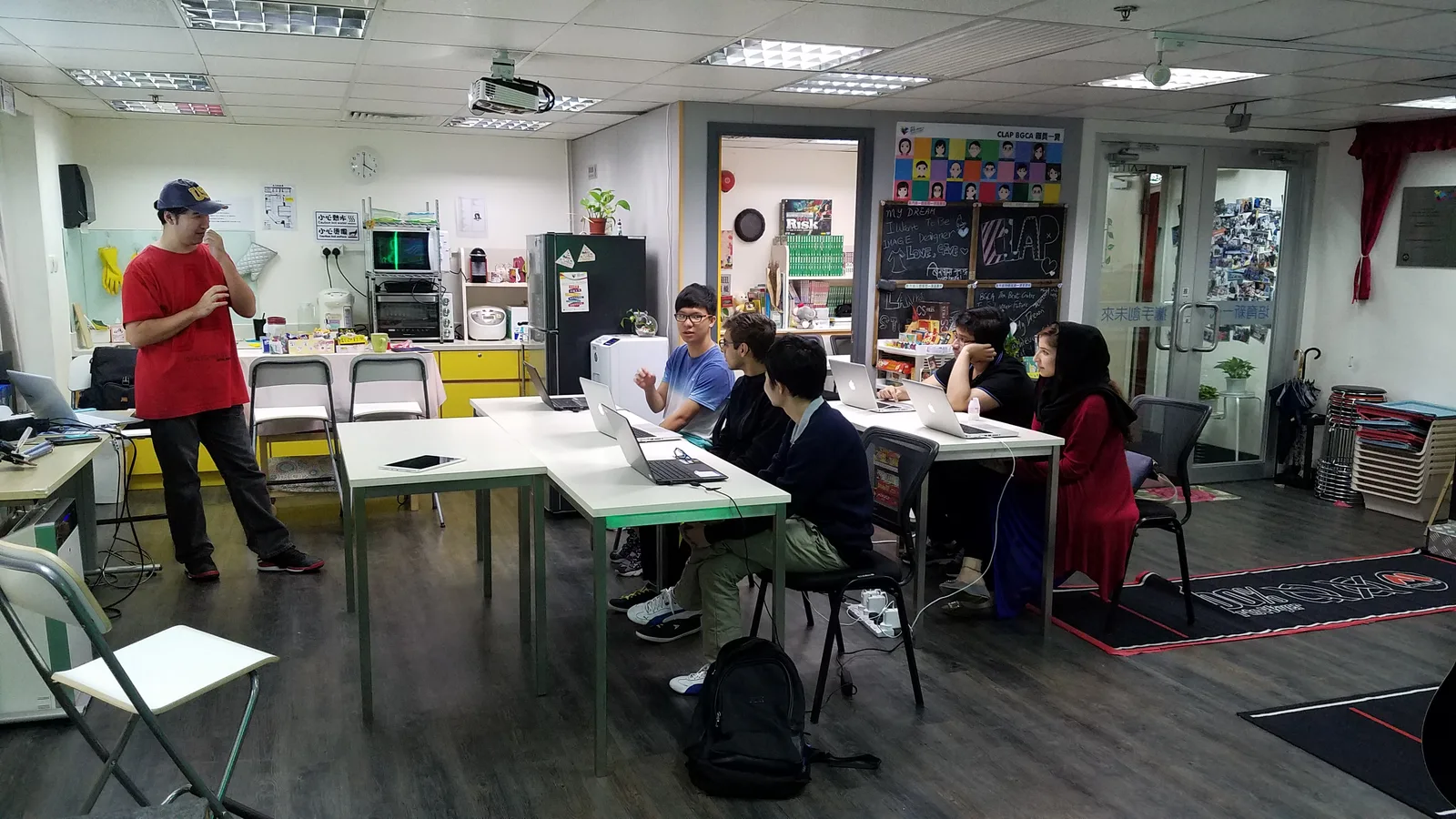
iCare’s training currently has three directions: App and animation production in Hong Kong, and a video production team for SEN youth in Guangzhou. It is not only the young people who take part; parents must be willing to learn and participate in production, so they can truly feel their children’s abilities and talents.
The training is pre-vocational, like an employee probation period, and free. We only accept three types of families: families with more than one SEN child; families where a parent or the child is SEN; and single-parent families where the child is SEN. These families face the greatest pressure, so we want to offer some support.
We train SEN youth to the standard of a game development and animation production team, so they learn independent work and division of labour in a commercial market. We extend training to two or three years so they can try different roles, explore directions, work with different people and learn to be part of a team. SEN youth have different personalities — high-functioning, low-functioning, outgoing, introverted — and each has suitable roles. If someone has major emotional difficulties or cannot fit into the iCare team, self-employment is still an option; we also teach freelancing skills.
Q3: Can even low-skilled, introverted youth break out of the “manual labour” path?
Yes. In the video production team, for example, outgoing people can be directors or hosts; introverted people can learn animation and editing. Introverted people labelled “low-skilled” can make very beautiful props. These are simple categories; everyone can take the role that suits their preferences.
We know one young person with autism and speech impairment, but not intellectual disability. He can produce excellent teaching kits, explaining clearly and fluently, and can use online packages or video teaching for other instructors. That is his skill.
Q4: How many successful training cases have there been?
Since 2014, we have trained over a thousand cases. Because resources are limited and we do not have a stable office or training centre, we cannot train more than 200 people a year.
In the past year, SEN families in the App training have produced more than 430 character education family apps and interactive games, with over 4 million downloads across 221 countries. This encourages both us and the families.
For SEN youth who complete training and can work independently, we refer them to contract work; if suitable, we employ them as assistant instructors to pass on skills to more SEN youth. If they find work in the market, we are delighted. We see ourselves as their career-planning talent scout, helping SEN youth and parents open a new direction and live with hope.
Original: https://www.icare.world/media/20190621/hkcss_issue64_interview.pdf