From a soaring career to a stroke: a founder who keeps serving vulnerable communities
Hong Kong Economic Times interviewed Tiffany about her journey from a high-flying career to a brainstem stroke, and how she rebuilt her life to serve SEN youth and older adults through digital inclusion.
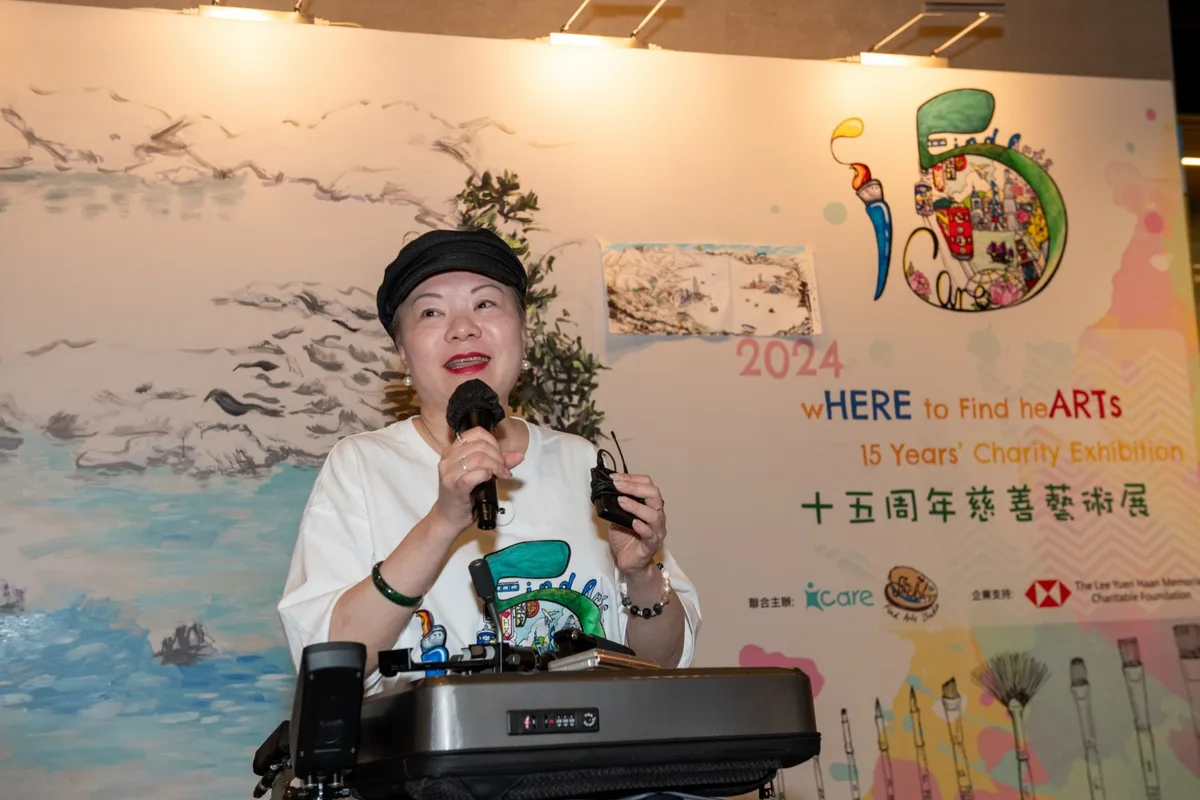
Top of her class from primary to secondary school, with one bachelor’s degree and three master’s degrees, founder of iCare and trainer of SEN youth and older adults through digital inclusion — Tiffany Chan seemed to have a smooth life. Beneath the surface, however, were deep scars: a stroke that affected her mobility, and social anxiety disorder since childhood, which gave her a deep empathy and led her to devote her time and heart to young people with special educational needs and disabilities, and to older adults.
Tiffany Chan, founder of iCare, graduated from UC Berkeley with a first degree in marketing and human resource management. She continued studying after work, earning master’s degrees in social and behavioural sciences and clinical psychology, followed by a master’s in theology. “I studied obsessively. Studying is my interest.”
Looking at these subjects, the reporter assumed she loved interacting with people, but the answer was surprising. “Absolutely not! I studied these subjects because I wanted to understand what kind of species humans are, and why I am so fearful when facing crowds. If I have to talk face to face with a stranger, I cannot look them in the eye.” She has social anxiety disorder (SAD).
Fainting after receiving an award on stage
Because of SAD, she often hid in a wardrobe as a child, feeling safe only in a small space. At school, her excellent results brought frequent awards on stage, but this was a nightmare for her. “On stage I became so nervous that my face turned purple, my stomach cramped and my blood sugar dropped. I collapsed with a thud and the school had to call an ambulance.”
After university, she joined Microsoft in the United States, then worked mainly as an Asia-Pacific market research and strategy analyst in multinational companies. Despite her academic and career success, Tiffany also had a heart for helping others, founding iCare and the “Elderly IT Classroom”. “I studied in Catholic primary and secondary schools and enjoyed volunteer humanitarian work. I have never stopped volunteering, using the method I find most comfortable — digital technology and IT, interacting with others through a screen. If you asked me to face a crowd like a fluent speaker, I would find it hard.”
A stroke on the seventh day of Lunar New Year
Devoting herself to volunteering while travelling to mainland China for work and meetings, she was extremely busy. In 2017 her body sent warning signals. “My body was not as strong as I imagined. The ligaments in my left leg tore several times, causing repeated falls and fractures, and it became inconvenient to get around.”
She had insulin resistance — her organs such as the liver and muscles resisted insulin, so blood sugar could not be absorbed by cells, accumulated in the blood and was excreted in urine, causing diabetes. She also had problems metabolising fats and was prone to accumulating “bad cholesterol” (LDL). On the seventh day of Lunar New Year in 2021, she suddenly collapsed in the office. It was an ischemic stroke. “It was a large-scale ischemic stroke, with about 70% of my brainstem cells damaged. Of the 12 pairs of cranial nerves controlled by the brainstem, 10 were severely damaged, leaving me paralysed on one side, though I was conscious.”
Taking charge of her own health
After 21 days in hospital, she worked tirelessly on rehabilitation in a nursing home. To regain her functions, she practised speech on her phone, proactively greeted staff and patients, and practised physiotherapy movements on her own for eight hours a day — more diligently than going to work, she said.
During rehabilitation she also experienced a low point. “My doctor told me the two main blood vessels in my forebrain were narrowing and I might have a second stroke soon. It felt like a death sentence, as if all my effort was wasted.” Tiffany thought about ending her life and considered jumping from a window, but her hands were too weak to open the firmly shut window. She reflected deeply and decided to find a way out for herself.
To turn her health around, she used her strengths, searched online for medical knowledge and changed her diet and routine. She kept exercising, received Chinese medicine treatment and taught herself to cook online to adjust her nutrition. “On TED Talks I saw Dr Sara Hallberg, who has since passed away from lung cancer, but she was the first person who helped me understand insulin resistance. I then focused on researching different scholars, doctors and experts — in three years I estimate I watched more than 3,000 related videos — and chose foods suitable for me. I cannot touch refined sugar, starch, additives or MSG.”
Life take two: helping others
The after-effects of the stroke, such as facial paralysis, still affected her slightly three years later, along with memory. “In the first year after the stroke, while chatting, I would suddenly forget where I was and what I was doing. It is better now; I do not lose track as often.”
Having gone through a major illness, she gained a new understanding of life. “Life has a take two. Since the second stroke the doctor mentioned has not arrived, I still have a choice about how to spend my life and invest in meaningful things, such as using IT to help SEN youth and older adults.”
She acted on it. To help young people with special educational needs find work, she established a non-governmental organisation working in family counselling and IT, and three social enterprises. She also led young people with SEN to create more than 430 computer programmes, mini-games and animated videos, with users in 221 non-Chinese-speaking countries.
Postscript: In the interview Tiffany shared many healthy eating methods. She was energetic, articulate and clear, and did not seem like someone with social anxiety disorder or a stroke. Yet she said her body was much weaker than before. She saw the art exhibition on 27–28 April as possibly her last iCare charity event. Then she opened her phone to show the reporter her blood sugar data. “It is not a very good state. My blood sugar is often below normal, which means my pancreas may not have recovered well, or there may be other problems.” She spoke softly. Although she said she does not expect to live to a very old age, she still lives each day with hope.
Photos: Chow Mei-ho and interviewee
Author and editor: Chow Mei-ho
Original: https://paper.hket.com/article/3749641/