
SEN career planning: smart ageing and walking with families

Career planning for people with SEN is an issue that cannot be ignored. Many parents of SEN individuals are growing older and worry about their children’s future work arrangements. At the same time, Hong Kong’s economic environment has made it harder for some employers to offer roles suited to different abilities. Under this double difficulty, SEN employment becomes even more challenging.
Between two social needs
Through iCare’s experience serving in care homes, we saw an important point of connection. Hong Kong’s population is ageing rapidly, and demand for residential care, day care and community care services keeps rising. Yet many frontline staff and assistants are approaching retirement, and staff shortages continue to worsen.
At the same time, many people with SEN are attentive, patient, focused and stable — qualities that fit elderly services and smart-ageing support work. We therefore piloted the Smart Ageing Digital Ambassadors programme, providing professional training and internships in IT, digital applications and smart-ageing skills.
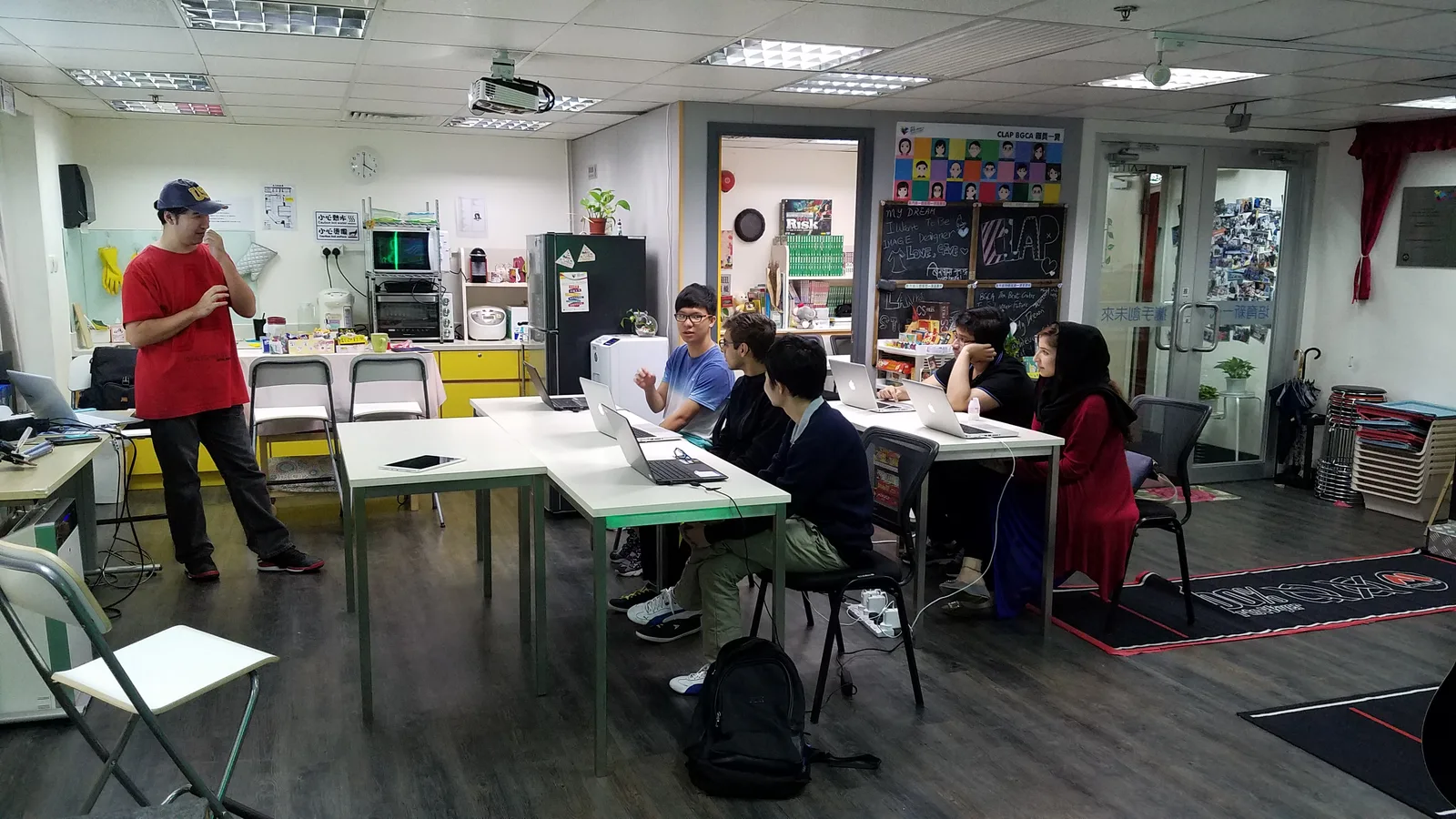
The programme covers smartphone and tablet use, social media management, animation and video production. Participants also join social enterprise internships and volunteer teaching for older adults. This is not only job training; it is a career path that responds to a social need.
Parents as lifelong mentors
Most of iCare’s training and internships are organised around the whole family. We believe parents are not only companions on the journey, but also the teachers who know their children best and can support them most deeply.
In the “parent-child at work” model, parents and children enter the workplace together to practise vocational skills. After each internship, mentors review performance with parents on the spot, so parents can understand their child’s progress and plan the next step together.
Many parents notice their child’s unique strengths more clearly through this process, discover potential that was previously unseen, and find a more suitable direction.
How employers can begin
People with SEN make up more than 7% of the population. Charity, social service organisations and social enterprises alone cannot meet the scale of employment demand. For true inclusion, employers must also participate and accept them.
Some employers may have doubts about SEN capabilities, or assume they can only do manual work. In fact, many SEN individuals are attentive, patient and good at repetitive tasks, and some have strong academic qualifications. If employers can set aside existing impressions and try hiring and training with an open mind, SEN youth can not only do the job but bring unexpected value to the business.
At the start, part-time or internship arrangements are an effective strategy. They reduce recruitment and management costs for companies while giving SEN individuals room to adapt to the pace of work.
A road we walk together
Career planning is not about drawing one fixed path for a young person. It is about creating opportunities to reposition at different stages. When schools, parents, employers and social service organisations walk together, SEN youth can develop their potential in a suitable environment, build confidence and gradually become part of society.
Source iCare practice
Related articles
Making games with PowerPoint and Excel: office software as a career starting point
We do not ask SEN youth to become professional game developers first. PowerPoint e-books and Excel quiz games help them become fluent with office software for future work.
Inclusive employment is not charity — it is a win-win
From CityU MBA to PolyU Computing’s 50th anniversary, iCare shared a simple message with business leaders: SEN youth are not a burden, but an overlooked talent pool.